Technique and methods
Training Load Parameters of Weightlifters of Different Bodyweight Classes, Age and Skill Level
English summary of Tyazhelaya Atletika. Ezhegodnik 1983 (Moscow: Fizkultura i Sport, 1983), pp. 20–27: the text is paraphrased, not translated; data tables are given in full with English labels; figures are the original images.
Aim and method
- Subjects: 75 lifters of the senior and youth national teams of the trade-union sports societies. Mean age 21.4 ± 3.4 years, training experience 6.4 ± 2.8 years, bodyweight 84.1 ± 25.1 kg.
- Period: two months before a competition — month 1 treated as preparatory, month 2 as competition month, each made of four weekly cycles (28 + 28 days); the meet was on day 57.
- Exercises: split into 14 groups (classic snatch, other snatch exercises, classic clean, other cleans, classic jerk, other jerks, snatch and clean pulls, squats, other squats, standing and lying bends, standing and bench press).
- Intensity: barbell weight as a percentage of the best snatch or clean-and-jerk achieved before the study (updated if the lifter set a new best in month 1), grouped into 14 zones of 10% each, up to 130–140%. Snatch pulls were related to the snatch; all other exercises to the clean & jerk.
- Analysis: computed at the MSU computing centre. Of about 200 load parameters, the 65 most informative were related to bodyweight class, age, training experience, skill level and result gain (scored in points using M. V. Starodubtsev's rating table).
Table 1. Monthly training load
| Exercise | Preparatory month | Competition month | ||
| lifts | mean weight, % | lifts | mean weight, % | |
| 1. Snatch (classic) | 141 ± 64 | 70.7 ± 6 | 128 ± 51 | 71 ± 5.5 |
| 2. Other snatch exercises | 282 ± 126 | 62 ± 7 | 206 ± 100 | 64.4 ± 6.2 |
| All snatch exercises, ≥ 71% | 162 ± 69 | 144 ± 59 | ||
| All snatch exercises, ≥ 90% | 19 ± 15 | 24 ± 25 | ||
| 3. Clean (classic) | 88 ± 46 | 69.8 ± 6.4 | 80 ± 38 | 70.9 ± 6.6 |
| 4. Other cleans | 190 ± 114 | 63.5 ± 9.7 | 134 ± 84 | 65.1 ± 6.4 |
| All cleans, ≥ 71% | 112 ± 73 | 94 ± 48 | ||
| All cleans, ≥ 90% | 10 ± 9 | 13 ± 10 | ||
| 5. Jerk from chest (classic) | 125 ± 57 | 69.9 ± 5.9 | 103 ± 54 | 70.2 ± 5.8 |
| 6. Other jerks from chest | 148 ± 65 | 61.4 ± 6.7 | 127 ± 64 | 62.2 ± 11 |
| All jerks, ≥ 71% | 102 ± 61 | 86 ± 48 | ||
| All jerks, ≥ 90% | 12 ± 11 | 13 ± 9 | ||
| 7. Snatch pulls | 203 ± 112 | 93 ± 11 | 151 ± 66 | 95 ± 11.7 |
| of which ≥ 101% | 70 ± 54 | 45 ± 41 | ||
| 8. Clean pulls | 170 ± 127 | 91.7 ± 13 | 124 ± 79 | 93.3 ± 12.6 |
| of which ≥ 101% | 47 ± 54 | 33 ± 44 | ||
| 9. Back and front squats | 395 ± 139 | 84.8 ± 7.9 | 307 ± 104 | 87.7 ± 8 |
| of which ≥ 101% | 62 ± 64 | 69 ± 57 | ||
| 10. Other squats | 51.4 ± 28 | 51.6 ± 27 | ||
| 11. Standing bends (good mornings) | 50 ± 24 | 51 ± 25 | ||
| 12. Lying bends (back extensions) | 20 ± 12 | 19.2 ± 10 | ||
| 13. Standing press | 39.4 ± 14.8 | 39.5 ± 13 | ||
| 14. Bench press | 49 ± 21 | 50.9 ± 20 | ||
| Total lifts in exercises 10–14 | 368 | 260 | ||
| Total lifts per month | 2110 ± 654 | 1620 ± 545 | ||
Not every lifter used exercises 10–14. Among those who did, monthly lifts (preparatory / competition) were: other squats 91 ± 67 / 71 ± 30; standing press 100 ± 75 / 82 ± 60; bench press 106 ± 62 / 67 ± 40; standing bends — / 105 ± 59 (first value illegible in the source); lying bends 113 ± 53 / 112 ± 21.
Findings: volume (number of lifts)
- Snatch and other snatch exercises: roughly the same number of lifts regardless of bodyweight, age or skill, in both months.
- Classic clean: lighter lifters do more, heavier fewer. By regression, for an equal result gain in the competition month a 52 kg lifter needs about 94 cleans and a 110 kg lifter about 68; more experienced lifters need somewhat fewer. Other cleans are used more by younger athletes.
- Classic jerk: also falls with bodyweight — about 128 in the 52 kg class, 103 at the 84.1 kg mean and 83 in the 110 kg class in the competition month — and with age (a 25-year-old 110 kg lifter needs about 67). Older lifters also do fewer other jerks.
- Pulls and squats: snatch pulls are the same for everybody; clean pulls are equal in the preparatory month but fall with experience in the competition month. Back/front squat volume is uniform in month 1 and decreases with experience in month 2. Heavier lifters do more "other squats" (month 1) and more standing presses; bench press volume is uniform; standing bends fall with age and experience, and in month 2 with bodyweight.
- Total volume: uniform in the preparatory month; in the competition month it falls with age — about 1760 lifts at 18, 1620 at 21.4 and 1470 at 25.
Findings: intensity
- Mean snatch weight rises as bodyweight falls: in the competition month about 73% for 52 kg, 71% at 84.1 kg and 69.5% for 110 kg. Younger, less experienced lifters train heavier — at 18 about 74% (52 kg) and 71% (110 kg), at 25 about 71% and 67.5%. Other snatch exercises follow the same pattern.
- Lifts at ≥ 71% in snatch exercises are the clearest intensity marker: more in lighter classes, and in month 2 more for younger and less experienced lifters. The number at ≥ 90% in month 2 depends on the class but not on age. Suggested optima at age 21.4: 175 lifts ≥ 71% and 32 lifts ≥ 90% for 52 kg; 122 and 17 for 110 kg. For the ≥ 71% zone: 195 and 140 at age 18, 150 and 95 at age 25.
- Clean and jerk: same pattern — heavier mean weights and more lifts ≥ 71% and ≥ 90% for lighter, younger and less experienced lifters. In other cleans (month 2) the weight grows with the lifter's bodyweight.
- Pulls and squats: older lifters use lighter snatch pulls in month 2. In clean pulls and in squats, lighter, younger and less experienced lifters use heavier weights and more lifts above 101%. Other squats are done at about the same weight by all, decreasing with age in month 2. Heavier classes use heavier standing presses.
Findings: skill level
Higher-class lifters do as many snatch, clean, jerk, snatch-pull and squat lifts as others, but fewer clean pulls, fewer other squats (month 2), fewer presses and bends, and fewer lifts overall. Their mean weights in the snatch exercises, cleans and classic jerk match other lifters of the same class and age, but they use lighter other jerks, snatch pulls and bench presses, fewer clean pulls above 101%, and — in month 2 — lighter squats with fewer reps above their best jerk.
What predicted a larger result gain
- A heavier mean snatch weight in the competition month (no link was found for the preparatory month) and more snatch-exercise lifts ≥ 71% in that month.
- A heavier mean classic clean weight in both months, and more cleans ≥ 71% and ≥ 90%.
- A heavier jerk weight; more jerks ≥ 71% in both months and ≥ 90% in month 2; and the total number of jerks in month 2.
- Clean pulls above 101% of the best jerk, in both months, and the mean clean-pull weight in month 2.
- A heavier squat weight in both months and, in month 2, more squats above 101% of the best jerk.
- The total number of snatch and jerk-type lifts at ≥ 71% across both months (see the figure).
- Standing bends correlated negatively with the competition result.
- Lifts at ≥ 90% in the preparatory month made no difference; in that month what mattered was the number of lifts at 71–90%.
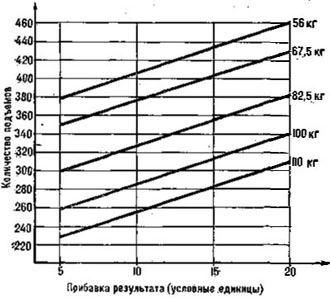
Table 2. Weekly distribution of the training load
Mean data for a lifter of 84.1 kg, aged 21.4, with 6.4 years of training. P1–P4 — weeks of the preparatory month, C1–C4 — weeks of the competition month.
| Exercise | Parameter | Preparatory month | Competition month | ||||||
| P1 | P2 | P3 | P4 | C1 | C2 | C3 | C4 | ||
| Snatch (classic) | lifts | 21 | 35 | 50 | 35 | 33 | 38 | 28 | 29 |
| mean weight, % | 70 | 70.5 | 71 | 71.5 | 72.7 | 70.4 | 75 | 65.9 | |
| Other snatch exercises | lifts | 65 | 57 | 81 | 79 | 62 | 69 | 52 | 23 |
| mean weight, % | 58 | 58.2 | 64 | 67.7 | 63.9 | 67 | 65.4 | 61.3 | |
| All snatch exercises, ≥ 71% | 32 | 32 | 55 | 43 | 39 | 51 | 37 | 17 | |
| All snatch exercises, ≥ 90% | 2 | 4 | 9 | 4 | 6 | 8 | 8 | 2 | |
| Last lifts before the competition: 100% — 10 ± 5 days, 95% — 9 ± 4 days, 90% — 8 ± 3 days | |||||||||
| Clean (classic) | lifts | 22 | 24 | 20 | 22 | 26 | 22 | 20 | 12 |
| mean weight, % | 67 | 69 | 72.3 | 71 | 73.2 | 71.8 | 72.9 | 65.8 | |
| Other cleans | lifts | 53 | 39 | 45 | 53 | 46 | 42 | 31 | 15 |
| mean weight, % | 62.5 | 63 | 64 | 64.5 | 64.3 | 65.6 | 68 | 62.5 | |
| All cleans, ≥ 71% | 20 | 25 | 33 | 34 | 30 | 28 | 26 | 10 | |
| All cleans, ≥ 90% | 2 | 1 | 3 | 4 | 4 | 4 | 4 | 1 | |
| Last lifts before the competition: 100% — 12 ± 7 days, 95% — 10 ± 5 days, 90% — 9 ± 4 days | |||||||||
| Jerk from chest (classic) | lifts | 28 | 25 | 42 | 30 | 30 | 33 | 25 | 15 |
| mean weight, % | 69.3 | 70.2 | 70.7 | 69.3 | 72.4 | 71 | 72.4 | 64.9 | |
| Other jerks from chest | lifts | 21 | 59 | 41 | 27 | 38 | 39 | 37 | 13 |
| mean weight, % | 59.9 | 60.7 | 62.6 | 62.4 | 64.7 | 60.2 | 60.9 | 62.9 | |
| All jerks, ≥ 71% | 20 | 22 | 35 | 25 | 27 | 26 | 23 | 10 | |
| All jerks, ≥ 90% | 4 | 1 | 3 | 4 | 5 | 4 | 4 | 1 | |
| Last lifts before the competition: 100% — 12 ± 7 days, 95% — 10 ± 5 days, 90% — 9 ± 4 days | |||||||||
| Snatch pulls | lifts | 56 | 50 | 48 | 49 | 49 | 49 | 36 | 17 |
| mean weight, % | 87.8 | 93 | 98.5 | 92.6 | 96 | 95.4 | 97.3 | 91 | |
| of which ≥ 101% | 23 | 22 | 7 | 18 | 16 | 13 | 13 | 3 | |
| Last lifts before the competition: ≥ 121% — 15 ± 7 days, ≥ 111% — 15 ± 9 days, ≥ 101% — 9 ± 5 days | |||||||||
| Clean pulls | lifts | 36 | 49 | 39 | 46 | 32 | 45 | 36 | 11 |
| mean weight, % | 90.2 | 92 | 92.4 | 92 | 97 | 96 | 94.4 | 85.9 | |
| of which ≥ 101% | 8 | 8 | 21 | 10 | 13 | 11 | 9 | 0 | |
| Last lifts before the competition: ≥ 121% — 19 ± 6 days, ≥ 111% — 15 ± 7 days, ≥ 101% — 14 ± 6 days | |||||||||
| Back and front squats | lifts | 114 | 107 | 99 | 75 | 100 | 90 | 74 | 43 |
| mean weight, % | 83.4 | 84* | 85.4 | 86.1 | 86.1 | 89.1 | 90.5 | 82.8 | |
| of which ≥ 101% | ?* | 13 | 27 | 11 | 22 | 24 | 17 | 6 | |
| Last lifts before the competition: ≥ 121% — 15 ± 6 days, ≥ 111% — 6 ± 4 days, ≥ 101% — 7 ± 5 days | |||||||||
| Total lifts | 517 | 528 | 559 | 506 | 510 | 517 | 387 | 205 | |
* Digits damaged in the digitised source (shown there as “84,” and a stray letter).
For standing and bench presses and for the bends, about 17% of the monthly volume falls in week 1 of the preparatory month and the rest is spread almost evenly, with intensity rising steadily from week 1 to week 4. In the competition month about 20% of these lifts fall in week 3 and no more than 10% of standing presses in week 4; the rest is concentrated, unevenly, in the first two weeks.
Conclusions
- The training load differs not only between light (52–60 kg), middle (75–82.5 kg) and heavy (100 kg and above) groups, but also within each class by age (training experience) and by skill level — in this group it was strictly individual.
- Using mathematical methods, the authors derived load parameters for each age from 18 to 25 in each of the 10 bodyweight classes, and separately for high-class lifters.
- The competition result depends on the work done in the preparatory month as well as in the competition month.
- In the preparatory month the key is a sufficient number of technically sound lifts at 71–90% (about 16% more than in the competition month). Lifts at 95–100% can be left out then, saving nervous energy for the competition month and the meet.
- Higher-class lifters characteristically drop exercises that do not correlate with the result, or keep them minimal and lighter.