Equipment and apparatus
An Improved Electrogoniometer for Recording Knee-Joint Angles
English summary of Tyazhelaya Atletika. Ezhegodnik 1983 (Moscow: Fizkultura i Sport, 1983), pp. 65–66: the text is paraphrased, not translated; figures are the original images.
Purpose
Electrogoniometers with PTP-type wire-wound potentiometers record joint angles continuously for N-327 chart recorders or the N-117 oscillograph; they are simple, fit any joint and serve both research and immediate technique feedback.
Problem
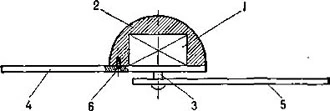
Ankle, hip and elbow pose no difficulty. At the knee, from lift-off to knee height, the forearm strikes the square-cornered metal potentiometer housing, especially in the narrow-grip clean: it obstructs the pull, can injure the arm, and athletes alter their technique to avoid it.
Modification
- Replace the housing cover with a lathe-turned mushroom-cap cover, sized to the housing.
- Material: any light one, preferably dielectric (ebonite, acrylic glass, plastic).
Result
Athletes lift unhindered, and knee-angle records become far more reliable for research and for immediate feedback to athletes and coaches.